Waste Removals Services in your area
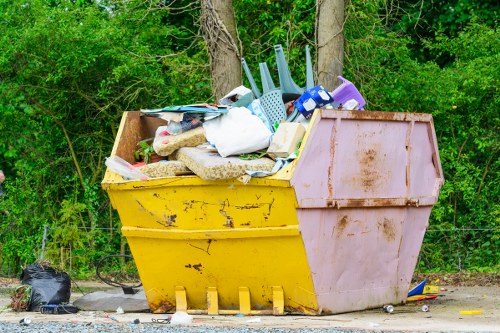
Waste Removals Services provides waste removal in your area for homes, landlords, trades and local businesses that need mixed rubbish collected and taken away in an organised way. The service is suited to everyday clear-outs, single-item removals and heavier loads that need more than a standard bin collection. Where a job includes different materials, we can separate the work into sensible groups so the right items are handled appropriately and the load is kept manageable.
Our approach is practical rather than complicated: we focus on lifting, loading, transport and disposal for waste that has already been gathered or is ready to be cleared. That can include furniture, domestic rubbish, garden material, bulky items and other unwanted contents depending on the job. Clear instruction helps the removal run smoothly, especially when items are spread across several rooms or when access is tight. A straightforward request with the main items and the location is usually the best starting point.
To request a quotation, gather the main details of what needs removing and the quantity involved, then send them through when you are ready. If you prefer to read more about typical charges first, see pricing and quotes for a useful overview before you make contact.
Household waste removal and bulky item collection
Domestic waste removal is often most useful when ordinary rubbish has become awkward to move or too much has built up for a routine bin day. We deal with jobs that may include old bags, broken household items, packaging, damaged fittings and mixed debris from day-to-day clear-outs. Bulky item collection suits objects that are heavy, awkward or simply inconvenient to carry without help, such as large furniture and other household pieces that no longer have a place in the property.
Because every load is different, the best result comes from matching the collection method to the waste itself. Some jobs are mostly light loose rubbish, while others contain a few large items that need more careful handling. In practical terms, this means the removal can be planned around access, size and volume rather than treated as a one-size-fits-all task. If you want to understand how broader disposal options are presented, the waste disposal page may help frame the type of service you need.
For larger clear-outs, it is often helpful to group items by room or by type before the collection day. That keeps the work orderly and makes it easier to distinguish what is being removed from what is staying. If you are ready to begin, send a brief description of the load and the access conditions, then ask for a quote in plain terms. When you want a fuller sense of the range, the waste removal service page is another useful place to start.
Rubbish collection for mixed loads and routine clear-outs

Rubbish collection is well suited to mixed loads where several different kinds of unwanted material have ended up together. That may include general household rubbish, small broken items, old fixtures, packaging and bagged waste that needs to be taken away in one visit. The service is useful when the load is not a single specialist item but still needs prompt, orderly removal rather than being left to accumulate further.
In many cases, the question is not only what has to go, but how much and how accessible it is. Mixed rubbish can be straightforward if it is already bagged or grouped, while loose material may take longer to sort and carry. If you are comparing related collection options, the rubbish collection page and the rubbish removal page both give a clearer sense of how this type of work is usually described.
Before asking for a quotation, it helps to note whether the rubbish is indoors or outside, whether anything is particularly heavy, and whether any items need careful manoeuvring through narrow spaces. Those few details allow the collection to be judged more accurately and reduce the need for back-and-forth. If you are dealing with a broader clearance rather than a simple pick-up, the waste clearance page is a sensible next step.
Furniture removal, sofas and white goods
Furniture removal covers larger household pieces that are difficult to move safely without help. This can include wardrobes, tables, chairs, cabinets and other bulky furnishings that may need carrying through hallways, stairs or shared entrances. Sofas are often treated as a separate category because of their size and awkward shape, so a specific removal may be the most convenient way to deal with them when a room needs to be cleared quickly and cleanly.
If the items include appliances, the job may also involve white goods such as fridges or other domestic units that are heavier than standard household waste. In addition, mattress disposal is often handled separately because mattresses are large, awkward and not always easy to place with general rubbish. Where you need more detail on these related services, the furniture removal and collection page, the sofa removal and collection page and the white goods recycle page all point to useful service areas.
Good preparation for this kind of work is mainly about access and identification. If a lift, narrow stairwell or awkward corner is involved, mention it early. If several items are being removed together, an inventory-style message is useful, but it does not need to be long. For a focused enquiry, list the main pieces first and ask for a price based on the actual load rather than on guesswork. You may also want to check the mattress disposal page if that is one of the key items.
Garden waste and outdoor clearance

Garden waste clearance is designed for outdoor material that builds up after pruning, tidying or landscaping work. Typical loads can include branches, clippings, leaves, plant cuttings, turf, soil and mixed green waste. Some jobs are light and compact; others contain heavier material that takes more effort to move and may need separating from general rubbish. The service is especially helpful when outdoor waste has become too bulky for normal household disposal.
Outdoor clearances often benefit from a simple division between green waste and non-green items. Old pots, broken garden furniture, damaged fencing or bags of miscellaneous waste may be present alongside natural material, and those items are best described clearly so the collection can be organised properly. If you need related information, the garden waste clearance page and the broader garden clearance page both give a better sense of the scope of this kind of work.
Where the load is spread across the garden, driveway or side access, it is useful to say so in one short message. That helps with planning and can prevent avoidable delays on the day. For the most useful quotation, keep your note focused on the type of waste, approximate volume and any awkward access points. Then, if you are ready, make a direct enquiry for the collection you need.
House, flat and property clearances
House clearance, flat clearance and wider property clearance are practical options when a larger number of contents or mixed items need to be removed together. These services are often more appropriate than a single-item collection because they are built around rooms, floors or whole properties rather than one piece of waste. They can suit emptied or partly emptied homes, landlords preparing a tenancy change, or family members dealing with an organised clear-out.
Different properties call for different levels of handling. A compact flat with lift access has different needs from a multi-room house with loft contents, bulky furnishings and items stored in outbuildings. The work may therefore range from straightforward removal of obvious waste through to a fuller sort of contents. If you need clearer labels for the type of job, the house clearance page, the flat clearance page and the property clearance page are all relevant destinations.
For bigger clearances, the most helpful enquiry usually names the property type, the main rooms involved and any items that should be handled with extra care. That is often enough to form a sensible starting quotation without overcomplicating the process. If the items belong to an estate or inherited property, the probate clearance page and the probate house clearance page may also be worth reading.
Office, commercial and business waste
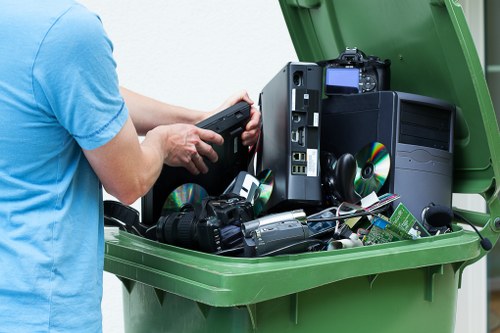
Commercial waste removal covers workplaces and business premises that need waste taken away without disrupting day-to-day activity more than necessary. This may include office furniture, packaging, mixed rubbish, small equipment, storage contents or material left after a workplace tidy-up. Business waste removal is particularly relevant when the contents are not quite standard domestic rubbish but still need quick, orderly clearance.
Office clearance and office clearances are often about creating an orderly handover rather than removing one or two isolated objects. Desks, chairs, filing items, shelving, obsolete equipment and general office clutter can all form part of the job. In a workplace setting, it is especially important to be clear about what remains on site and what should be removed, because the work often has to fit around keys, access arrangements and the continuing use of the premises. Related pages such as office clearance, office clearances, business waste removal and commercial waste collection give a fuller view of the options.
When you request a quotation, note whether the work is a one-off office emptying job, a recurring business waste need or a simple removal of surplus items. That distinction matters because commercial loads can vary sharply in volume and handling requirements. If you want to compare how different waste streams are described, the commercial waste disposal page and the bulk waste collection page are useful starting points.
About Waste Removals Services in your area
What is now the historic county of Middlesex was absorbed into Greater London and neighbouring administrative areas in 1965, but the place name still survives in districts, institutions and local memory across west and north-west London. It is closely associated with the growth of the capital along routes leading out from the City, and with the expansion of suburbs during the nineteenth and twentieth centuries. Transport links were central to that development, especially railways and road corridors that turned former villages and estates into connected residential and commercial districts. The result is an area with layers of older settlement, later urban growth and present-day redevelopment.
The surviving landscape includes a mix of parkland, riverside stretches, civic buildings and residential streets that reflect different periods of London’s expansion. In some places, red-brick housing from the interwar years sits near older parish churches or remnants of village greens. Local identity is also shaped by the boroughs and towns that now occupy what people still loosely call Middlesex, including places with their own high streets, museums, public gardens and community venues. The River Brent, the Crane, the Colne and other waterways have influenced the geography of the area, while Heathrow Airport and the surrounding transport network remain prominent modern landmarks in the west.
Cultural life is varied rather than centralised, with local theatres, sports grounds, parks and heritage collections spread across the districts that make up the broader historic area. Some parts are known for large public open spaces such as Osterley Park, Gunnersbury Park, Richmond Park’s northern edges or the waterways around the Grand Union Canal, while others are better known for town centres, suburban shopping parades and institutional campuses. Because Middlesex is now a historic rather than a current administrative county, references to it tend to be geographical and cultural rather than governmental, and that is part of what makes the name still recognisable today.
Bulky waste, large items and specialist disposal
Bulky waste collection is useful when the items involved are too large or cumbersome for ordinary disposal arrangements. It may include furniture, appliances, mattresses, household fittings and other oversized objects that need careful movement from property to vehicle. Large item collection is not only about size, but also about shape, weight and the ease with which the object can be moved safely through the premises.
Specialist disposal pages are often helpful when the waste type is distinct enough to deserve its own handling category. Fridges, mattresses, sofas and beds can each present different practical considerations, so the service information should be read carefully rather than assumed. For that reason, the pages for large item collection, bulky waste collection, bed disposal and fridge disposal can all help you decide which route fits the load best.
The simplest way to request a quotation for bulky items is to identify the item, the number of pieces and any access issues in one clear note. If several categories are involved, list them in order of size or difficulty. Keep the description practical rather than lengthy, and mention whether the items are ready to collect or still fixed in place. Then you can decide whether a specialist page such as sofa removal or mattress removal and collection is the closest match.
Clearance help for lofts, garages and storage areas
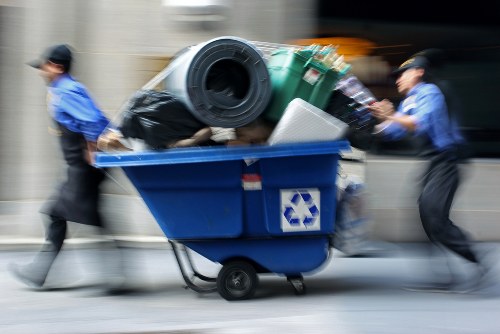
Loft clearance and garage clearance are useful when accumulated contents need sorting before the useful space can be put back into regular use. These areas often contain a mix of old household goods, boxes, broken items, seasonal equipment and forgotten materials that have built up over time. A clearance of this kind may be more involved than a standard waste pick-up because the contents are often spread out, stored awkwardly or mixed with items that must be handled carefully.
In practice, the job may include carrying items down from the loft, moving contents out of the garage, and removing waste that has been tucked away in corners or behind larger objects. That makes it helpful to be clear about whether the space is partially sorted or needs a fuller clear-out. The pages for loft clearance and garage clearance are appropriate if those areas are the main focus, while the broader home clearance page may suit a wider property job.
If you are arranging a quotation, tell us which storage area is involved, whether the contents are mostly light or bulky, and whether anything must be left in place. That gives a more dependable starting point for planning the work. For mixed domestic jobs that do not fit one single room, the broader junk clearance page can also be a useful reference before you send your details and request the next available price.
Recycling, disposal choices and how to prepare a quotation
Not every load is handled in exactly the same way, which is why recycling and disposal choices matter. Some material is straightforward and can be grouped with general waste, while other items need separating because of size, composition or the way they should be processed after collection. Recycling-oriented pages are helpful when you want to understand how waste is described and which materials may be better dealt with apart from ordinary rubbish.
Useful categories can include mixed recyclables, household waste with reusable elements, and items that are better sorted before removal begins. The pages for recycling and rubbish, waste recycling and recycling and sustainability provide a sensible overview of those distinctions. Where pricing is part of the decision, the service pages and the pricing page can be read together so the quotation request matches the kind of load being removed.
Two simple steps usually make the quotation process easier: first, note the main items and their approximate quantity; second, explain any access points, stairs, or other practical limits that might affect lifting and loading. Then choose the most relevant service page and ask for a direct estimate based on the actual work needed. If you are ready to proceed, request a quotation using the contact route that best suits your job.