Business Waste Removal in London
If you run a business in the capital, you already know that waste builds up fast. Offices generate packaging, paper, equipment and catering waste. Shops deal with cardboard, shrink wrap and damaged stock. Cafés and restaurants need frequent clearance for food-related waste, glass, packaging and general rubbish. Trades, landlords, property managers and building contractors all face different disposal challenges too. That is why Business Waste Removal in London needs to be reliable, flexible and easy to arrange.
London is a city where space is valuable, access can be tight and time matters. A waste collection service that understands local conditions can save your team hours each week and help your premises stay tidy, compliant and ready for customers or staff. Whether you are in a small office in Shoreditch, a retail unit in Camden, a hospitality venue in Southwark or a multi-storey building in Westminster, a local waste removal team can make a practical difference.
On this page, you will find clear information about what business waste removal involves, what is usually included, how the service works, what affects pricing, and how to prepare for a collection. If you need commercial waste removal, office waste clearance or a one-off business rubbish collection, this page is written to help you decide the next step with confidence.
Why London businesses need a dependable waste removal service

Business premises in London often produce more waste than owners expect. Even when teams recycle carefully, everyday operations create a steady stream of rubbish that cannot simply be left outside. Offices replace old chairs, printers and desks. Retail businesses receive packaging and display materials every day. Warehouses and workshops accumulate pallets, offcuts and broken stock. In a busy city, the wrong waste setup quickly becomes a problem.
For many companies, the issue is not just volume. It is timing, access and storage. Space in central London is limited, which means bins can overflow sooner than planned. Some buildings have narrow stairwells, shared courtyards or loading restrictions that make disposal more complicated. Others sit on red routes or in areas with controlled parking, so a vehicle cannot just stop and load at any time. A local collection team understands these realities and can work around them.
Choosing a provider for business waste removal London is not only about getting rid of rubbish. It is also about keeping your workplace orderly, helping staff work efficiently and reducing disruption to customers. A good service should feel like part of your operations, not an extra headache to manage.
What counts as business waste?

Business waste is any rubbish produced by commercial activity rather than by a household. That can include everyday office waste, bulky items from refurbishments, stock that cannot be sold, and general rubbish from premises that serve customers or the public. The type of waste matters because different items may need different handling or disposal routes.
Common examples include:
- Office paper, folders, confidential documents and packaging
- Desks, chairs, filing cabinets and shelving
- Cardboard, shrink wrap, pallets and transport packaging
- Shop fittings, display units and damaged stock
- Kitchen waste, broken appliances and catering refuse
- Builder’s waste, trade waste and renovation debris
- IT equipment, cables and other electrical items
- Mixed rubbish from move-outs, clearances or refits
Some businesses also produce specialist waste streams, such as confidential paper, electrical equipment or materials from light construction work. In those cases, it is important to arrange the right type of collection so items are handled correctly and, where required, directed into suitable recycling or disposal processes.
Who uses commercial waste collection in London?

Different types of customers need waste removal for different reasons. Offices may book regular collections to keep work areas clear and avoid storing rubbish in corridors or kitchens. Shops and showrooms often need fast removal after deliveries, seasonal changes or refurbishments. Restaurants, cafés and bars may require prompt clearances because waste can build up quickly in compact back-of-house spaces.
Property managers and landlords also rely on commercial rubbish removal when tenants move out, common areas need clearing or an office unit is being prepared for a new occupant. Builders, decorators and fit-out contractors may need a clearance at the end of a job so materials and offcuts do not delay handover. Schools, clinics, gyms and community organisations may need sensitive, scheduled collections that fit around opening hours.
In a city as mixed as London, every site has its own constraints. A glass-fronted office in the City of London is not the same as a basement café in Soho or a warehouse in Park Royal. A local service is useful because it can adapt to the building type, access conditions and the pace of your operation.
What is included in a business waste removal service?
Customers usually want to know exactly what happens when they book a collection. A professional service is generally designed to take the weight off your team, from lifting and loading to responsible disposal. Depending on the job, the service may include one or more of the following:
- Collection of general commercial waste from inside or outside the premises
- Heavy lifting and loading by trained staff
- Removal of bulky items such as furniture and office equipment
- Sorting of recyclable materials where appropriate
- Transport away from the site in suitable vehicles
- Disposal through approved facilities and waste routes
- Clearance from basements, upper floors, service yards or loading bays
For many customers, the main benefit is that the team does the hard work without disturbing the business more than necessary. That matters in London, where many workplaces are occupied, customer-facing or shared with other tenants. A well-organised collection should be efficient, tidy and respectful of the building.
Some jobs are one-off clearances. Others are arranged on a regular basis, such as weekly, fortnightly or according to the needs of the site. If your waste levels change through the year, a flexible arrangement can be a practical choice.
How the service works
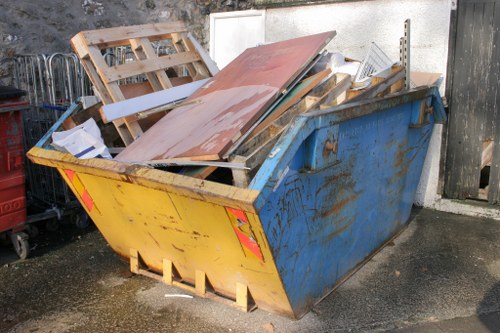
Most customers want a straightforward process. The usual steps are simple and designed to reduce disruption to your day. First, you explain the type and amount of waste, along with access details such as floor level, lift availability, parking restrictions or loading arrangements. This helps the team understand what equipment and vehicle size may be needed.
Next, the collection is scheduled at a time that works for your business. In London, that might mean early morning before opening, a lunchtime slot, after closing or during a quieter period for your building. Timing matters because it can help avoid interruptions to staff, visitors or neighbouring businesses.
On collection day, the team arrives, assesses the load and removes the items. If the waste is already bagged, boxed or stacked, that speeds things up. If it is mixed or bulky, the team can usually sort and load it on site. Once everything is removed, it is taken away for the appropriate disposal route. The aim is to leave your premises clear and usable again as soon as possible.
Why local knowledge matters in London
London is not one uniform service area. Each part of the city comes with different practical challenges. Central areas such as Westminster, the City, Holborn and Covent Garden may have traffic restrictions, limited waiting space and high footfall. Inner boroughs such as Hackney, Islington, Lambeth and Hammersmith can involve busy streets, shared access and compact commercial units. Outer areas and industrial estates may offer more space, but still require careful planning around gates, yards or business park rules.
A local team is useful because it understands the real-world conditions that affect collections. Narrow mews roads, basement access, communal entrances, lift limits, parking bays, one-way systems and building management rules can all affect how a job is done. A team familiar with London waste removal can plan around these obstacles rather than treating every site the same.
That local understanding also helps when urgency matters. If your office needs to clear out before a lease handover, your shop has stock arriving, or a fit-out is running late, you need a service that can respond in a practical way. Business waste removal in London works best when the provider knows how the city moves.
Types of commercial and office waste we commonly handle

Different business sectors produce different waste streams. A good service should be able to handle a broad range of everyday and bulky items. Here are some of the most common categories customers ask about:
Office clearances
Office clearances often include desks, task chairs, cabinets, monitors, printers, paperwork, shelving and general rubbish from reorganising or moving premises. This is common in shared offices, co-working spaces and refurbished buildings across areas such as Canary Wharf, London Bridge, Clerkenwell and Paddington.
Retail waste
Retail premises generate cardboard, packaging, damaged stock, display stands, old mannequins, shelving and fixture waste. Seasonal changes, shop refits and stock refreshes can all create sudden disposal needs, especially in busy areas like Oxford Street, Brixton, Stratford or Greenwich.
Hospitality waste
Cafés, bars, pubs and restaurants often need fast and regular removal of bins, broken furniture, packaging, kitchen-related waste and items from back-of-house storage. Tight service yards and early-morning collection times are often preferred.
Trade and refurbishment waste
Builders, decorators, joiners and fit-out teams may need removal of timber, plasterboard, offcuts, packaging, old fittings and general debris. These jobs often need a reliable turnaround so the site can stay clear and progress can continue without delays.
Electrical and mixed items
IT hardware, monitors, cables, small appliances and mixed office clutter are common in workspaces that are upgrading systems or closing down. These materials should be separated and handled carefully where needed.
What makes a business waste collection useful for local customers?
Most local customers are not looking for jargon or complicated arrangements. They want a service that keeps their premises clean, saves staff time and fits around business operations. The best collections are organised, punctual and considerate of building rules.
Useful benefits often include:
- Less clutter in staff areas, corridors and storage rooms
- Better presentation for customers, tenants and visitors
- Reduced lifting and manual handling for employees
- Faster clearances during moves, refits or end-of-lease jobs
- Flexible booking around opening hours and site restrictions
- Support with bulky or awkward items that are hard to move internally
For many London businesses, the biggest advantage is consistency. When waste is cleared regularly, the workplace feels calmer and easier to run. Staff can focus on their work rather than finding places to stack bags, boxes or broken fixtures.
Preparation checklist before your collection
A little preparation helps the collection run faster and reduces the time spent on site. You do not usually need to do much, but a few simple steps can make the process smoother.
- Separate bulky items from loose rubbish where possible.
- Place bags, boxes and items in a location that is easy to reach.
- Tell the team about stairs, lifts, narrow entrances or access codes in advance.
- Check whether parking, loading or building entry needs to be arranged ahead of time.
- Remove any personal or confidential items that should not be taken away.
- Label anything that needs special handling or should be left behind.
- Let staff know when the collection is happening so the route is clear.
If the site is busy or shared with other businesses, it may help to nominate one person to oversee the clearance. That can avoid confusion on the day and keep everything moving.
Tip: If your waste includes confidential paperwork, electronics or mixed office materials, ask about the best way to separate those items before the team arrives.
Pricing factors for business waste removal
Customers often ask what affects the cost of commercial waste removal. While exact prices depend on the job, the main factors are usually easy to understand. The more the team needs to remove, the more time and vehicle space the job may require. Access can also affect the level of labour involved.
Common pricing factors include:
- Volume of waste or number of items
- Weight of the load
- Type of materials being removed
- Whether items are bulky, awkward or located upstairs
- Distance from the vehicle to the waste
- Parking, waiting and access conditions
- Time of collection and any out-of-hours requirement
For London businesses, access often plays a major role. A clearance from a ground-floor loading bay is different from one that involves stairs, long corridors or a crowded office floor. Clear information at the quotation stage helps the provider recommend the right approach.
It is also worth noting that the cheapest option is not always the best fit. A well-planned service that removes the waste safely and efficiently can save time, reduce stress and avoid repeat visits.
Why choose a local company rather than trying to manage it yourself?
Some businesses try to manage waste internally using staff time, hired vans or ad hoc trips to disposal points. That may seem manageable at first, but it often becomes inefficient. Staff lose working hours, vehicles are tied up, and the process can become more complicated than expected. In a city like London, that inconvenience is amplified by traffic, parking rules and limited unloading space.
A local commercial waste removal company brings the right vehicles, lifting support and knowledge of disposal requirements. This means your team is not left lifting heavy items, sorting mixed rubbish or trying to arrange transport in the middle of a busy day. For busy offices, retail units and hospitality venues, that is a major advantage.
It can also improve workplace safety. Large items, sharp materials and awkward loads can be a manual handling risk if they are moved by untrained staff. Professional collection helps reduce that pressure and keeps the process controlled from start to finish.
Areas covered across London
London businesses operate in a wide range of neighbourhoods, and commercial waste collection should be able to serve them all. Typical areas that may benefit from a flexible local service include Central London, the West End, the City, North London, East London, South London and West London. That includes places such as:
- Westminster, Holborn, Soho and Covent Garden
- City of London, Canary Wharf and London Bridge
- Shoreditch, Hackney, Islington and Camden
- Lambeth, Southwark, Brixton and Clapham
- Hammersmith, Fulham, Kensington and Chelsea
- Stratford, Walthamstow, Leyton and Greenwich
- Acton, Ealing, Wembley and Park Royal
This mix of commercial districts, high streets, industrial estates and residential-led business areas means a one-size-fits-all approach rarely works. A provider that regularly handles commercial waste collection in London is better placed to understand the realities of each part of the city.
What customers usually want from a quote
When requesting a quote, it helps to provide as much useful detail as possible. That does not mean you need to measure everything precisely, but a clear description of the job makes it easier to estimate the time and labour needed. The main details that help are:
- What type of business waste you have
- Whether items are bagged, boxed or loose
- Whether there are bulky items like desks or cabinets
- How much access there is from the street or loading bay
- Whether the collection needs to be urgent or scheduled
- Any restrictions linked to the building or street
If your business has ongoing waste needs, ask about regular collections rather than only one-off visits. This can be a practical choice for restaurants, shops, offices and managed properties that produce waste consistently throughout the month.
Request a free quote when you are ready to compare options and choose a service that suits your premises.
Frequently asked questions
Can you collect from an office building with stairs or no lift?
Yes, in many cases. Access details matter, so it is helpful to explain the layout in advance. Stair-only access or upper floors may take longer, but a planned collection can still usually be arranged.
Do I need to sort the waste first?
Not always. Some customers do sort materials to make the process quicker, while others prefer the team to handle mixed waste on site. If you have recyclables, confidential documents or electrical items, it is sensible to separate them where possible.
Is this suitable for small businesses?
Yes. Small shops, independent cafés, start-ups, salons, studios and offices all use waste removal services. Even a small amount of clutter can become inconvenient in compact London premises.
Can collections be arranged outside normal business hours?
Often yes, depending on availability and site access. Early morning, evening or quieter slots can be useful for busy locations or customer-facing premises.
What if my business is in a controlled parking area?
That is common across London. If there are parking restrictions, loading bay rules or timed access windows, let the provider know in advance so the visit can be planned properly.
Choosing the right waste removal partner
When comparing services, think about more than just the collection itself. Ask whether the team understands your type of premises, whether they can work around your operating hours and how they handle access challenges. A good service should feel practical, responsive and easy to coordinate.
You may also want to consider whether the provider can support both one-off and regular collections. Many businesses need a mix of services over time, such as an office clearance during a move and then routine commercial waste collections afterwards. Having a single local team that can handle both can simplify things.
Above all, look for a service that respects your time. London businesses are busy, and waste removal should be one less thing on your list. A clear process, sensible scheduling and proper handling of your rubbish all help make that possible.
Ready to arrange business waste removal in London?
If your premises need clearing, your bins are overflowing or your team is spending too long dealing with rubbish, it may be time to bring in a local specialist. Whether you need office waste clearance, shop rubbish collection, trade waste removal or a one-off business clearance, the right service can make the job straightforward.
From central offices and retail units to hospitality venues, managed properties and light industrial sites, Business Waste Removal in London should be flexible enough to suit your building and your schedule. If you want a tidy site, less disruption and a practical solution for ongoing waste, it is worth arranging a collection that fits your needs.
Contact us today to discuss your requirements, or book your service now if you are ready to clear space and keep your business running smoothly.